
They say that Filipinos generally foster a delicate food palate. Our Adobo, Chop Suey, Sinigang, Pinakbet, and Lechon, to name a few, are savory yet easy on the palate. They don’t need complicated seasonings and spices, and a true definition of Filipino food culture.
I’d like to think of myself as someone with a slightly less delicate palate, in part because I’m a Filipina who’s part Chinese (on Noche Buena, we serve crowd favorites like pancit, lechon, and lumpiang shanghai, accompanied with Ma Tsang and Kwe Tiao; and in more recent occasions, Sushi—Japanese, of course.
On top of that, being a melting pot of cultures, the Philippines has long been a land boasting a glorious array of international culinary recipes. We’re talking not just Chinese, but Korean, Indonesian, Malaysian, American, Japanese, etc. (I guess that solves the mystery as to why sushi’s in my family’s roster of celebratory eats).
Not to mention how I have relatives strewn across the globe. Time off for our overseas kindred gave way to them bringing back pieces of the food cultures from places they’d been to.
What’s interesting is that many Filipino families share a similar story. It’s quite the cultural norm: having loved ones working abroad, to better the lives of those back home.
So maybe the Pinoy (slang for “Filipino”) palate’s not as limited as once thought. Despite these, nothing could’ve prepared me for what I was about to expose my senses to: Authentic Indian cuisine.
My First Taste Of India Food Culture: What Food Is In India
Taste buds, meet Indian food. North Indian Food, to narrow it down. I remember my first visit to India’s Capital, and soon-to-be my second home, Delhi (I’m married to a wonderful husband who happens to be Indian). What I don’t remember is my first meal upon landing, probably since I didn’t know what it was called then.
Surprisingly, and very likely because it’s easy to recall, “Dosa” comes to mind (it’s technically South Indian). I had it in one of the stations next to the long national highway going to Jaipur. This thin, crispy, crepe-like South Indian dish is made from a fermented batter of rice and urad dal (black gram). Mouthwatering enough? Wait to you hear this: it’s typically served hot with coconut chutney and sambar (a lentil-based vegetable stew. Delicious.
As it turns out, it’s now one of my favorites, as other Indian dishes soon have become.
Flavors, Spices, & Textures Galore
North Indian cuisine is not for the faint of heart. Or taste. Or spice tolerance. It’s rich in flavor. That’s putting it mildly, and in the best way possible. There’s not one meal that’s lackluster, bland, or boring.
Everything is a strong, picqant explosion of two or more of these widely used and loved spices: cumin, coriander, cardamom, garam masala, and turmeric. And that’s just the beginning. I won’t be listing every single spice and condiment in this post (saving those for an upcoming blog on how you can DIY restaurant-style Indian food), but you get the gist.
Wrapped around these aromatic spices is the buttery goodness of ghee, widely known elsewhere as clarified butter (ghee-centered blog coming soon!), tomato-based curries, slow-simmered lentils like dal tadka or dal makhani, and thick gravies that are as rich and full of depth as they sound.
Food Misconceptions: “Spices” Vs. “Spicy”
Right off the…spatula, karchi or palta as we call it here up north, I learned that I had this preconceived notion about Indian food. I asked myself, “What food is India known for?”
Indian Food = SPICY.
Oh, was I proven wrong at first taste!
Although a lot of Indian cuisine, homemade or otherwise, uses a lot of spice, it doesn’t stop they’re. What they are is “full of spices.” Plentiful, wonderful spices. Spices as in “flavors.”
That is the not-so-secret to North Indian delights.
What Is North Indian Cuisine?
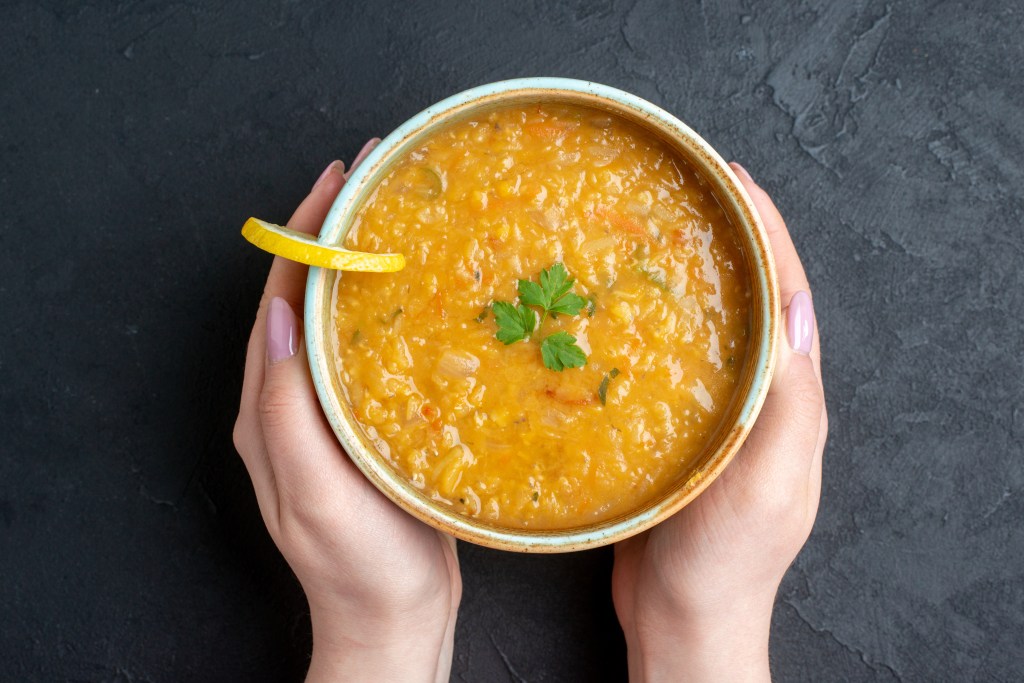
North Indian comfort food, you say? It’s dal. Yellow dal, to be specific (there are about 12 to 15 dal variants, possibly more). Not counting whether they’re split or otherwise. Paired with hot basmati rice, Yellow dal is one of the most quintessential meals in the land of spices and stories.
I mentioned rice, but this part of The Heart of South Asia, roti or chatpati, actually reigns supreme. Apart from roti, you also have your naan, bhatura, paratha/parantha, etc.
Unlike in the Philippines, where rice is the staple, in North India, it’s flatbreads. They’re made fresh on a tawa or griddle with 3 ingredients (usually): wheat-based flour, a little salt, and a little oil. Mix them and knead. Then, cut palm-sized balls, flatten them, and heat one by one on the tawa. Without leavening, it’s called tandoori roti.
In some restaurants and roadside eateries or dhabas, they’re puffed over an open fire.
Enjoyed with flatbreads are a range of dishes other than dal: rajma (kidney beans in a thick masala), palak paneer (spinach with fresh cheese), or chole (spiced chickpeas). You also get hearty lentil stews and vegetable sabzis (spiced, sautéed, or simmered vegetable dishes).
As if that isn’t enough, and it truly isn’t, the menu extends to chole bhature or spiced chickpeas and thalis. Thali is a well-rounded meal, with small servings served in several metal bowls, and presented on a large steel platter. It’s a complete meal, featuring dishes like dal, sabzi, rice, roti, chutney, and something sweet (we’ll dip into Indian desserts later on, as they deserve an entire blog post to themselves).
The Veg & Non-Veg Duo
Vegetarian food is ingrained in Indian food culture, with deep roots in Hindu traditions. But what fascinates me about “vegetarian” food is that it’s not some trendy fad. You find it everywhere!
If you haven’t noticed yet (feel free to scroll up to the dishes mentioned in the previous paragraphs), they’re all veg. All well-balanced, absolutely mouth-watering meals, and they’re plant-based, with dairy on the side. I almost forgot—I haven’t even begun diving into India’s dairy culture and market. They’re the #3 producer of milk globally!
That’s not to say that meat-based dishes are nowhere to be found. Heavily influenced by Mughlai, Punjabi, and Kashmiri culinary traditions, North Indian non-veg dishes are created through slow-cooking, marinades, and layers and layers of spices.
Chicken and mutton (goat meat) are the most common, and they’re cooked in different ways: tandoori chicken, chicken tikka, butter chicken (murgh makhani), chicken korma, keema (minced meat curry), Desi-style chicken curry, seekh kebabs, etc.
Final Bites
This blog is in no way an extensive representation of North Indian food. There’s a whole world of Indian food I haven’t even touched on yet. Consider it an introduction to what you can expect if you’re new to the spice-laden, aromatically rich cuisines of India. We’ll tackle Indian snacks, that flavorful rabbit hole, in another blog.
From one foreigner to another (or possibly an Indian citizen who’s curious about our take on Indian food),
Share your Indian food experience in our Community Room! Spice up the thread with your story, and let’s keep this conversation going.
 Wellness Room Journals
Leave a comment